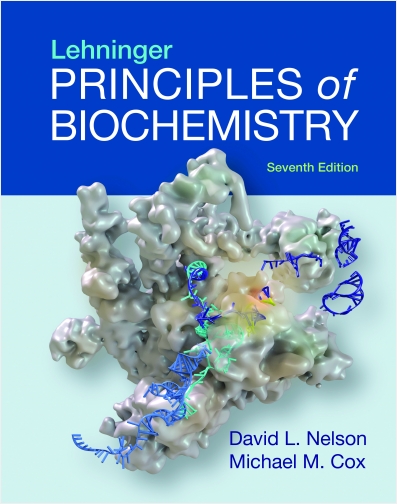
Lehninger Principles Of Biochemistry
Por: David L. Nelson
Editorial: W. H. Freeman
Disponibilidad: Bajo pedido
Notas: Sin existencias Existencias: 0
Existencias:
(*)Los precios y existencias están sujetos a cambios sin previo aviso.
TABLE OF CONTENTS. 1. The Foundations of Biochemistry 1.1 Cellular Foundations 1.2 Chemical Foundations Box 11 Molecular Weight, Molecular Mass, and Their Correct Units Box 12 Louis Pasteur and Optical Activity: In Vino, Veritas 1.3 Physical Foundations Box 13 Entropy: Things Fall Apart 1.4 Genetic Foundations 2. Water 2.1 Weak Interactions in Aqueous Systems 2.2 Ionization of Water, Weak Acids, and Weak Bases 2.3 Buffering agains pH Changes in Biological Systems Box 2-1 Medicine: On Being One's Own Rabbit (Don't Try This at Home!) 2.4 Water as a Reactant 2.5 The Fitness of Aqueous Environment for Living Organisms 3. Amino Acids, Peptides, and Proteins 3.1 Amino Acids Box 3-1 Methods: Absorption of Light by Molecules: The Lambert-Beer Law 3.2 Peptides and Proteins 3.3 Working with Proteins 3.4 The Structure of Proteins: Primary Structure Box 32 Consensus Sequences and Sequence Logos 4. The Three-Dimensional Structure of Proteins 4.1 Overview of Protein Structure 4.2 Protein Secondary Structure Box 41 Methods: Knowing the Right Hand from the Left 4.3 Protein Tertiary and Quaternary Structures Box 42 Permanent Waving Is Biochemical Engineering Box 43 Why Sailors, Explorers, and College Students Should Eat Their Fresh Fruits and Vegetables Box 44 The Protein Data Bank Box 45 Methods: Methods for Determining the Three-Dimensional Structure of a Protein 4.4 Protein Denaturation and Folding Box 46 Medicine: Death by Misfolding: The Prion Diseases 5. Protein Function 5.1 Reversible Binding of a Protein to a Ligand: Oxygen-Binding Proteins Box 51 Medicine: Carbon Monoxide: A Stealthy Killer 5.2 Complementary Interactions between Proteins and Ligands: The Immune System and Immunoglobulins 5.3 Protein Interactions Modulated by Chemical Energy: Actin, Myosin, and Molecular Motors 6. Enzymes 6.1 An Introduction to Enzymes 6.2 How Enzymes Work 6.3 Enzyme Kinetics as an Approach to Understanding Mechanism  Box 61 Transformations of the Michaelis-Menten Equation: The Double-Reciprocal Plot Box 62 Kinetic Tests for Determining Inhibition Mechanisms Box 63 Curing African Sleeping Sickness with a Biochemical Trojan Horse 6.4 Examples of Enzymatic Reactions 6.5 Regulatory Enzymes 7. Carbohydrates and Glycobiology 7.1 Monosaccharides and Disaccharides Box 71 Medicine: Blood Glucose Measurements in the Diagnosis and Treatment of Diabetes Box 72 Sugar Is Sweet, and So Are . . . a Few Other Things 7.2 Polysaccharides 7.3 Glycoconjugates: Proteoglycans, Glycoproteins, and Glycolipids 7.4 Carbohydrates as Informational Molecules: The Sugar Code 7.5 Working with Carbohydrates 8. Nucleotides and Nucleic Acids 8.1 Some Basics 8.2 Nucleic Acid Structure 8.3 Nucleic Acid Chemistry 8.4 Other Functions of Nucleotides 9. DNA-Based Information Technologies 9.1 Studying Genes and Their Products Box 91 A Powerful Tool in Forensic Medicine 9.2 Using DNA-Based Methods to Understand Protein Function 9.3 Genomics and the Human Story Box 92 Medicine: Personalized Genomic Medicine Box 93 Getting to Know the Neanderthals 10. Lipids 10.1 Storage Lipids 10.2 Structural Lipids in Membranes Box 101 Medicine: Abnormal Accumulations of Membrane Lipids: Some Inherited Human Diseases 10.3 Lipids as Signals, Cofactors, and Pigments 10.4 Working with Lipids 11. Biological Membranes and Transport 11.1 The Composition and Architecture of Membranes 11.2 Membrane Dynamics 11.3 Solute Transport across Membranes Box 111 Medicine: Defective Glucose and Water Transport in Two Forms of Diabetes Box 112 Medicine: A Defective Ion Channel in Cystic Fibrosis 12. Biosignaling 12.1 General Features of Signal Transduction Box 121 Methods Scatchard Analysis Quantifies the Receptor-Ligand Interaction 12.2 ProteinCoupled Receptors and Second Messengers Box 122 Medicine: G Proteins: Binary Switches in Health and Disease Box 123 Methods: FRET: Biochemistry Visualized in a Living Cell 12.3 Receptor Tyrosine Kinases 12.4 Receptor Guanylyl Cyclases, cGMP, and Protein Kinase G 12.5 Multivalent Adaptor Proteins and Membrane Rafts 12.6 Gated Ion Channels 12.7 Integrins: Bidirectional Cell Adhesion Receptors 12.8 Regulation of Transcription by Nuclear Hormone Receptors 12.9 Signaling in Microorganisms and Plants 12.10 Sensory Transduction in Vision, Olfaction, and Gustation Box 124 Medicine: Color Blindness: John Daltons Experiment from the Grave 12.11 Regulation of the Cell Cycle by Protein Kinases 12.12 Oncogenes, Tumor Suppressor Genes, and Programmed Cell Death Box 125 Medicine: Development of Protein Kinase Inhibitors for Cancer Treatment 13. Bioenergetics and Biochemical Reaction Types 13.1 Bioenergetics and Thermodynamics 13.2 Chemical Logic and Common Biochemical Reactions 13.3 Phosphoryl Group Transfers and ATP Box 131 Firefly Flashes: Glowing Reports of ATP 13.4 Biological Oxidation-Reduction Reactions 14. Glycolysis, Gluconeogenesis, and the Pentose Phosphate Pathway 14.1 Glycolysis Box 141 Medicine: High Rate of Glycolysis in Tumors Suggests Targets for Chemotherapy and Facilitates Diagnosis 14.2 Feeder Pathways for Glycolysis 14.3 Fates of Pyruvate under Anaerobic Conditions: Fermentation Box 142 Athletes, Alligators, and Coelacanths: Glycolysis at Limiting Concentrations of Oxygen Box 143 Ethanol Fermentations: Brewing Beer and Producing Biofuels 14.4 Gluconeogenesis 14.5 Pentose Phosphate Pathway of Glucose Oxidation Box 144 Medicine: Why Pythagoras Wouldnt Eat Falafel: Glucose 6-Phosphate Dehydrogenase Deficiency 15. Principles of Metabolic Regulation 15.1 Regulation of Metabolic Pathways 15.2 Analysis of Metabolic Control Box 151 Methods: Metabolic Control Analysis: Quantitative Aspects 15.3 Coordinated Regulation of Glycolysis and Gluconeogenesis Box 152 Isozymes: Different Proteins That Catalyze the Same Reaction Box 153 Medicine: Genetic Mutations That Lead to Rare Forms of Diabetes 15.4 The Metabolism of Glycogen in Animals Box 154 Carl and Gerty Cori: Pioneers in Glycogen Metabolism and Disease 15.5 Coordinated Regulation of Glycogen Synthesis and Breakdown 16. The Citric Acid Cycle 16.1 Production of Acetyl-CoA (Activated Acetate) 16.2 Reactions of the Citric Acid Cycle Box 161 Moonlighting Enzymes: Proteins with More Than One Job Box 162 Synthases and Synthetases; Ligases and Lyases; Kinases, Phosphatases, and Phosphorylases: Yes, the Names Are Confusing! Box 163 Citrate: A Symmetric Molecule That Reacts Asymmetrically 16.3 Regulation of the Citric Acid Cycle 16.4 The Glyoxylate Cycle 17. Fatty Acid Catabolism 17.1 Digestion, Mobilization, and Transport of Fats 17.2 Oxidation of Fatty Acids Box 171 Fat Bears Carry Out β Oxidation in Their Sleep Box 172 Coenzyme B12: A Radical Solution to a Perplexing Problem 17.3 Ketone Bodies 18. Amino Acid Oxidation and the Production of Urea 18.1 Metabolic Fates of Amino Groups 18.2 Nitrogen Excretion and the Urea Cycle Box 181 Medicine: Assays for Tissue Damage 18.3 Pathways of Amino Acid Degradation Box 182 Medicine:Scientific Sleuths Solve a Murder Mystery 19. Oxidative Phosphorylation and Photophosphorylation Oxidative Phosphorylation 19.1 Electron-Transfer Reactions in Mitochondria Box 191 Hot, Stinking Plants and Alternative Respiratory Pathways 19.2 ATP Synthesis Box 192 Methods: Atomic Force Microscopy to Visualize Membrane Proteins 19.3 Regulation of Oxidative Phosphorylation 19.4 Mitochondria in Thermogenesis, Steroid Synthesis, and Apoptosis 19.5 Mitochondrial Genes: Their Origin and the Effects of Mutations Photosynthesis: Harvesting Light Energy 19.6 General Features of Photophosphorylation 19.7 Light Absorption 19.8 The Central Photochemical Event: Light-Driven Electron Flow 19.9 ATP Synthesis by Photophosphorylation 19.10 The Evolution of Oxygenic Photosynthesis 20. Carbohydrate Biosynthesis in Plants and Bacteria 20.1 Photosynthetic Carbohydrate Synthesis 20.2 Photorespiration and the C4 and CAM Pathways Box 201 Will Genetic Engineering of Photosynthetic Organisms Increase Their Efficiency? 20.3 Biosynthesis of Starch and Sucrose 20.4 Synthesis of Cell Wall Polysaccharides: Plant Cellulose and Bacterial Peptidoglycan 20.5 Integration of Carbohydrate Metabolism in the Plant Cell 21. Lipid Biosynthesis 21.1 Biosynthesis of Fatty Acids and Eicosanoids Box 211 Medicine: Mixed-Function Oxidases, Cytochrome P-450s and Drug Overdoses 21.2 Biosynthesis of Triacylglycerols 21.3 Biosynthesis of Membrane Phospholipids 21.4 Cholesterol, Steroids, and Isoprenoids: Biosynthesis, Regulation, and Transport Box 212 Medicine: ApoE Alleles Predict Incidence of Alzheimers Disease Box 213 Medicine: The Lipid Hypothesis and the Development of Statins 22. Biosynthesis of Amino Acids, Nucleotides, and Related Molecules 22.1 Overview of Nitrogen Metabolism Box 221 Unusual Lifestyles of the Obscure but Abundant 22.2 Biosynthesis of Amino Acids 22.3 Molecules Derived from Amino Acids Box 222 On Kings and Vampires 22.4 Biosynthesis and Degradation of Nucleotides 23. Hormonal Regulation and Integration of Mammalian Metabolism 23.1 Hormones: Diverse Structures for Diverse Functions Box 231 Medicine: How Is a Hormone Discovered? The Arduous Path to Purified Insulin 23.2 Tissue-Specific Metabolism: The Division of Labor Box 232 Creatine and Creatine Kinase: Invaluable Diagnostic Aids and the Muscle Builders Friends 23.3 Hormonal Regulation of Fuel Metabolism 23.4 Obesity and the Regulation of Body Mass 23.5 Obesity, the Metabolic Syndrome, and Type 2 Diabetes 24. Genes and Chromosomes 24.1 Chromosomal Elements 24.2 DNA Supercoiling Box 241 Medicine: Curing Disease by Inhibiting Topoisomerases 24.3 The Structure of Chromosomes Box 242 Medicine: Epigenetics, Nucleosome Structure, and Histone Variants 25. DNA Metabolism 25.1 DNA Replication 25.2 DNA Repair Box 251 Medicine: DNA Repair and Cancer 25.3 DNA Recombination Box 252 Medicine:Why Proper Chromosomal Segregation Matters 26. RNA Metabolism 26.1 DNA-Dependent Synthesis of RNA Box 261 Methods: RNA Polymerase Leaves Its Footprint on a Promoter 26.2 RNA Processing 26.3 RNA-Dependent Synthesis of RNA and DNA Box 262 Medicine: Fighting AIDS with Inhibitors of HIV Reverse Transcriptase Box 263 Methods: The SELEX Method for Generating RNA Polymers with New Functions Box 264 An Expanding RNA Universe Filled with TUF RNAs 27. Protein Metabolism 27.1 The Genetic Code Box 271 Exceptions That Prove the Rule: Natural Variations in the Genetic Code 27.2 Protein Synthesis Box 272 From an RNA World to a Protein World Box 273 Natural and Unnatural Expansion of the Genetic Code Box 274 Induced Variation in the Genetic Code: Nonsense Suppression 27.3 Protein Targeting and Degradation 28. Regulation of Gene Expression 28.1 Principles of Gene Regulation 28.2 Regulation of Gene Expression in Bacteria 28.3 Regulation of Gene Expression in Eukaryotes Box 281 Of Fins, Wings, Beaks, and Things Appendix A Common Abbreviations in the Biochemical Research Literature Appendix B Abbreviated Solutions to Problems Glossary Credits Index
| Título | Lehninger Principles Of Biochemistry |
|---|---|
| Autor | David L. Nelson |
| Editorial | W. H. Freeman |
| Año | 2017 |
| Idioma | |
| Páginas | 1328 |
| ISBN | 9781464126116 |
| Pasta | Dura |
| Disponibilidad | Bajo pedido |




Envio Gratis
Compras desde de $800
Pagos Seguros
100% Pagos Seguros
Devoluciones
30 dias devoluciones garantizadas
24/7 Asistencia
Asistencia personalizada

LA PÁGINA WEB QUE TU LIBRERÍA NECESITA